

Matter door sensor vs contact sensor: what's the difference?
If you've searched for a “Matter door sensor” in the UK, you've probably come across two completely different types of product and wondered which one you actually need. Here's what separates them, and where a single device that now does both fits in.
A Matter contact sensor (Eve, Aqara, Ring) detects whether a door is open or closed, using a magnet on the door frame. A Matter door lock sensor detects whether a door is locked or unlocked, by reading the position of the lock itself. They answer two different questions.
The Locksure Matter Lock Sensor is the UK's only retrofit device that answers both from one unit on your existing lock: lock state is built in, and door open/closed state is available with the optional £9.99 Open/Close Magnet. It fits over your existing euro cylinder, is shipping now from £59.99, and works with Apple Home, Google Home, Alexa, SmartThings and Home Assistant.
Matter, the smart-home standard agreed between Apple, Google, Amazon and Samsung in 2022, has made almost every category of connected device compatible with almost every smart-home app. That's great if you know what type of device you're shopping for. It's confusing if you're trying to work out what's actually on offer.
“Matter door sensor” is one of the most confusing searches in the whole category. The results page mixes up two entirely different product types. This post explains what each type actually does, which one you probably want, and where the Locksure Matter Lock Sensor fits in: a single retrofit device that covers both.
What a Matter contact sensor actually does
A Matter contact sensor is a two-piece device. One small box sits on the door or window frame; a small magnet sits on the door or window itself. When the magnet moves away from the box, the box reports “open.” When they come back together, it reports “closed.” That's the whole device.
Every major UK-available option (Eve Door & Window, Aqara Contact Sensor P2, SmartThings Multipurpose Sensor, Ring Alarm Contact Sensor) works this way. They expose one Matter endpoint called a “Contact Sensor” or “Position Sensor” that toggles between two states: open or closed. That's what you get in Apple Home, Google Home, Alexa, SmartThings, or Home Assistant.
What contact sensors are good at
- Notifying you when any door or window opens (front door, back door, patio, shed, garden gate)
- Detecting whether a door was left open for too long, useful for the fridge, the garage, or a greenhouse
- Triggering smart-home automations when a door opens (turn on lights, disarm alarm, announce through a speaker)
- Acting as a cheap security perimeter for windows, which rarely have locks you can sense electrically
- Being extremely small, cheap (£25-£45), and running for years on a single coin-cell battery
What contact sensors cannot tell you
- Whether your front door is actually locked, because they don't read the lock, only whether the door is shut
- Whether you remembered to engage the deadbolt or turn the key
- Anything at all about the state of the lock mechanism; they're mechanically blind to it
This is the single biggest misunderstanding in the Matter door sensor category. You can close a door and walk away without locking it, and a contact sensor will cheerfully report “closed.” The “is my door secure?” question is something a contact sensor cannot answer. That's the question most people actually want answered.
Never forget to lock your doors again.
Locksure fits over the lock you already have and shows its locked or unlocked state on your phone, from anywhere. No drilling, no lock replacement.
See how it works →What a Matter lock sensor actually does
A Matter lock sensor, distinct from a Matter smart lock, attaches to your existing lock mechanism and reports its state to your smart home. It exposes a Matter endpoint called a “Door Lock,” which in most platforms shows up as a padlock icon that's either Locked or Unlocked.
This category is much newer and smaller than contact sensors. Matter only added the Door Lock endpoint in version 1.0, and the vast majority of Matter-compatible locks on the UK market today are full smart lock replacements, motorised devices that replace your existing cylinder or thumb-turn. Yale Linus, Nuki Smart Lock, Bold Smart Cylinder, SwitchBot Lock are all in this category. They cost £130-£250, require installation, and are often not permitted in rental properties.
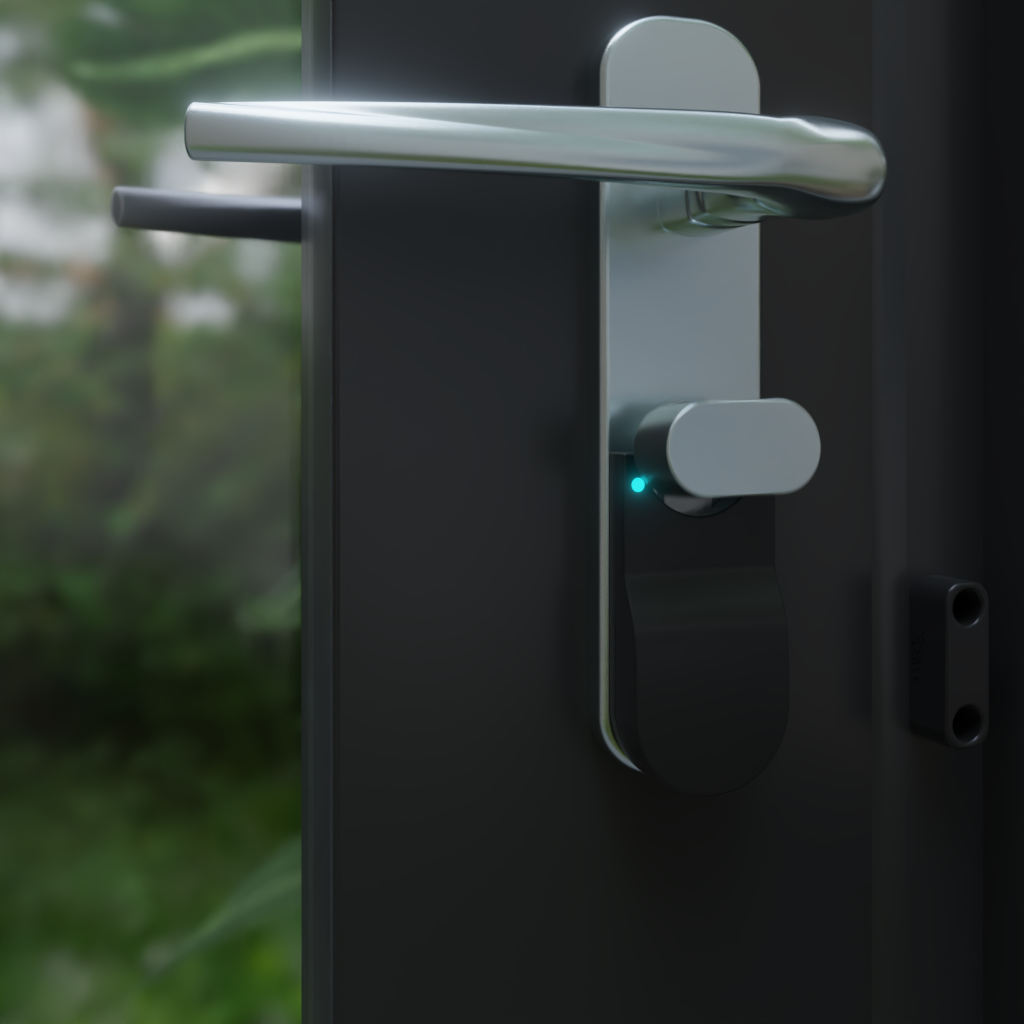
A retrofit Matter lock sensor, one that reads your existing lock without replacing it, was the gap in the UK market. That's what the Locksure Matter Lock Sensor is built for, and it's shipping now from £59.99.
What lock sensors are good at
- Answering the genuine security question: “is my front door locked?”
- Voice queries like “Alexa, is the front door locked?” or “Hey Siri, is my door locked?”
- Triggering automations on lock state: dim the lights when the door locks for the night, alert family when a parent hasn't locked up by bedtime
- Providing peace-of-mind status from anywhere in the world, any time
- Catching the “door closed but not locked” scenario that contact sensors can't see
What a monitoring-only lock sensor deliberately doesn't do
- Remote unlock. The Locksure sensor is monitoring only; it has no motor and cannot actuate the lock. This is a deliberate design choice, not a limitation
- Replace your existing lock; it attaches to it non-destructively
- Know whether the door itself is open or closed on its own; that needs the optional £9.99 Open/Close Magnet added to the same sensor
The security implications of that first point matter. A monitoring-only lock sensor removes entire categories of attack from the threat model: there's no motor for an intruder to remotely command, and no pathway on the Matter network that leads to your door being physically unlocked. The only way to unlock your door is still from inside, with a key, just as it always has been. This is a feature, not a compromise.
Different problems, different products
If you're still not sure which category you actually need, think about what question you want your smart home to answer. That immediately tells you which sensor type.
Buy a contact sensor if you want to know Is the door shut?
Garage left open, kids leaving the back door ajar, freezer not fully closed, greenhouse ventilation overnight, shed broken into. All about whether a door or window is physically open.
Buy a lock sensor if you want to know Is the door locked?
Did I lock up before the school run, did elderly mum lock up at bedtime, did the cleaner lock the door when leaving, am I actually secure or did I just shut the door. All about whether your lock is engaged.
Most households want both: they care about windows and back doors being closed, and they care about whether the front door is properly locked. For a long time, that meant buying two separate devices from two separate manufacturers, commissioning them both into Matter, and wiring up two separate automations.
The device that does both
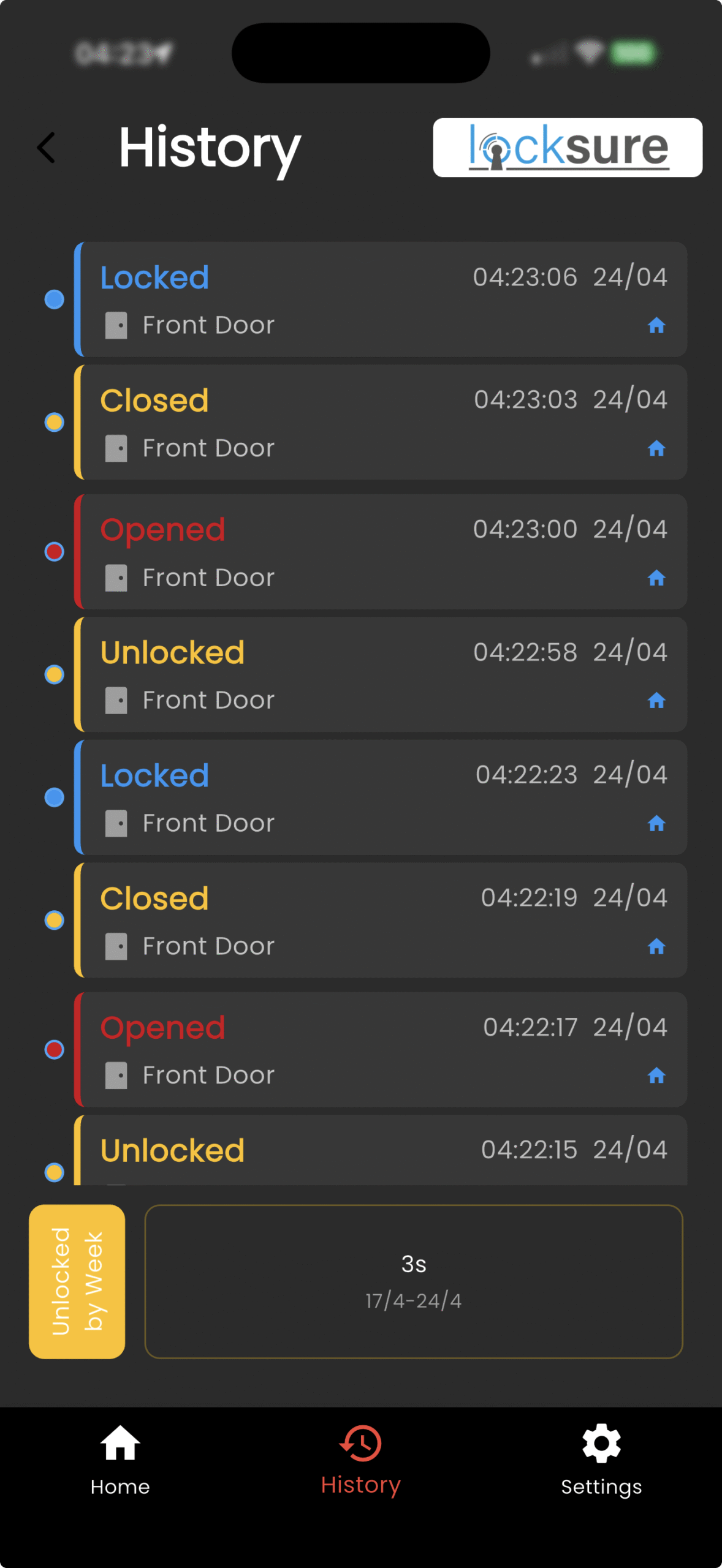
We designed the Locksure Matter Lock Sensor to cover both categories in one device. It exposes two independent Matter endpoints: a Door Lock endpoint that reports whether the lock is engaged (active out of the box), and a Contact Sensor endpoint that reports whether the door is open or closed, once you've added the optional £9.99 Open/Close Magnet. One adhesive unit on your existing lock. One commissioning flow. Two separate states in your smart home app, independently automatable.
This gives you the lock-state visibility that a standalone Matter lock sensor provides, plus the door-position awareness that a contact sensor provides, at a single price point instead of two. It's what we think the Matter door sensor category should have looked like from the start.
The retrofit Matter lock sensor, shipping now
Lock state built in, plus optional door open/close with the £9.99 Open/Close Magnet, from one Matter device on your existing lock. Works with Apple Home, Google Home, Alexa, SmartThings and Home Assistant. 18-month CR2032 battery, 5-minute install, monitoring only by design. From £59.99.
Which Matter platforms show both?
All five major Matter platforms handle both the Door Lock and the Contact Sensor endpoint types correctly, though the way they surface the information differs.
Apple Home
Shows two separate tiles in the Home app. The Lock tile displays as a padlock that's open or closed. The Contact Sensor shows as a door icon with Open or Closed text. Automations can be triggered on either state independently. Works with Siri voice queries: “Hey Siri, is the front door locked?” returns the current state.
Google Home
Shows the device with both Lock and Door entities inside a single accessory card. Household Routines (Google's automation feature) can trigger on either state, and you can speak “Hey Google, is the door locked?” for a voice check. Integrates with Nest Hub displays for visual status.
Amazon Alexa
Surfaces the two endpoints under Devices → Locks and Devices → Contact Sensors. Alexa Routines can trigger on either state. Voice queries work out of the box with no skill needed: “Alexa, is the front door locked?” is a native question Alexa understands for any Matter Door Lock endpoint.
Home Assistant
Exposes both endpoints as separate entities: a lock. entity for lock state and, once the optional Open/Close Magnet is fitted, a binary_sensor. entity for contact state. This is the most flexible of the five platforms because you can write automations that combine both states, for instance: “if the door is closed but the lock hasn't engaged within 5 minutes, notify me.” That's the kind of compound logic a single-endpoint sensor can't express.
Samsung SmartThings
Shows the device in your SmartThings app with both endpoints accessible through the accessory detail page. SmartThings Routines support multi-condition triggers, so you can combine Matter events with Zigbee, Z-Wave, and cloud integrations through a single routine.
Quick questions
Can one Matter device have both Lock and Contact Sensor endpoints?
Yes. The Matter specification explicitly allows a single physical device to expose multiple endpoints, each representing a different device type. The Locksure Matter Lock Sensor uses this to present itself as both a Door Lock and a Contact Sensor within a single accessory, with the Contact Sensor endpoint becoming active once you add the optional £9.99 Open/Close Magnet. Most platforms will show them as two tiles or entries under the same device name.
Do I need a Matter hub?
Not a manufacturer-specific hub, no. You do need a Matter controller (Apple Home, Google Home, Alexa, SmartThings, Home Assistant) and, for battery-powered Matter devices like sensors, a Thread border router on your network. Most UK homes with any modern smart-home gear already have one: Apple TV 4K, HomePod mini, Nest Hub 2nd gen, Echo 4th gen, and eero 6+ all qualify. Full border router list here.
Will the Locksure Matter sensor work with my existing Locksure hub?
The Matter Thumb Turn and Key Turn sensors need no Locksure hub. They join your Thread mesh directly instead of connecting to a Locksure hub. If you already own a Locksure hub-based system, the Matter units run alongside it independently. You don't need to choose between them.
Is this the first Matter lock sensor?
There have been a handful of Matter smart locks (Yale, Nuki, Aqara, Bold) for a few years. There have been many Matter contact sensors. To our knowledge, the Locksure Matter Lock Sensor is the first UK-available retrofit Matter device that reports both lock state and door position in a single unit on an existing lock. That's what makes it distinctive.