

For UK insurers, MGAs and scheme operators
Every security condition on a household policy is a condition about hardware. The hardware is rarely the problem. Locksure is a sensor that fits over the existing euro cylinder on a front door and records the one thing no lock standard, survey or wording can see: whether the door was actually locked, and when. It costs about £50 a door, changes nothing on the door, and has no motor, so it can never be used to open one.
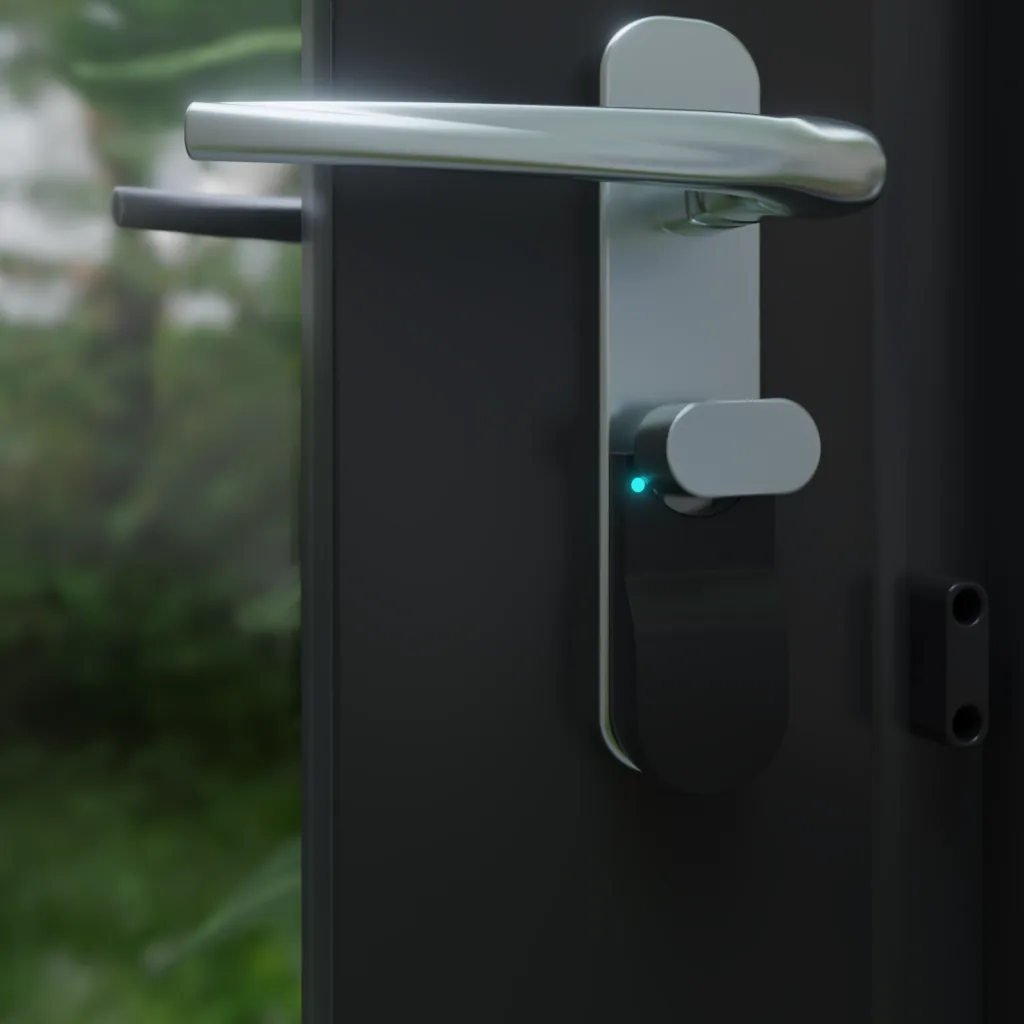
You can specify a lock standard, ask for it on the proposal form and check it at claim. What you cannot do, and nobody can, is know whether that lock was turned on the night it mattered. A door that was pulled shut and never locked presents exactly the same rated hardware as a door that was locked. From the outside, from the survey, and from the wording, the two are identical.
The Crime Survey for England and Wales puts it at around one in four burglaries involving entry through a door or window that was left unlocked.
That is the share of the loss that sits outside every control an insurer currently has. Better locks do not touch it, because the lock was already good enough. Alarms do not touch it, because nobody broke anything. It is a behaviour, it happens on the inside of the door, and until now it left no record.
Locksure records it. One fact per door, locked or unlocked, with a time against every change. That is all it does, and it is the one thing on the door that nothing else measures.
A household policy is touched once a year. A front door is touched every day. A device that answers "did I lock the door" is one the policyholder opens because they want to, and that puts your scheme in front of them in the moment they are thinking about the very risk you cover.
The person who is told at 23:14 that the door is unlocked is the person who gets up and locks it. Whether that happens often enough on your book to matter is not something we can tell you today, and we will not pretend to. It is precisely what a pilot exists to measure, and it is measurable within a year.
Placing a device in a customer's home usually means either a leak sensor priced to need justifying, or a smart lock that needs a locksmith and a conversation about remote access. This is neither. About five minutes, adhesive, nothing drilled, about £50 a door after the first. If you already put anything into homes, the route is the expensive part and you have it.
There is no motor. It cannot lock, unlock, or connect to the mechanism. The cylinder, the keys and the rated hardware stay exactly as they were, so nothing you have already assessed needs assessing again. A smart lock asks an underwriter to think about remote unlocking. This does not.
By default the app and the record sit with the person who lives there. If a scheme is built so that a customer agrees to share lock state, they can. If it is not, nothing leaves the home. The design of that consent is yours, and the record is evidence of a kind that did not previously exist for any security condition.
It is not a smart lock, not a camera and not a microphone. It records the state of the lock and nothing else.
The device costs about what a year of a modest add-on cover costs, which is what makes it possible to place it with a policy rather than sell it beside one. A scheme that can say "we help you know the door is locked" is saying something no competitor's wording can, and the question of whether it changes the book is the one a pilot answers.
The person who closes the door is not the person carrying the excess. Between tenancies the property is empty and visited by contractors, cleaners and viewers, and nobody currently records whether it was locked behind them. On an occupied let the app sits with whoever holds it, so it stays the tenant's own device unless they agree otherwise.
These wordings already carry security conditions that nobody can evidence after the event. A lock-state record is that evidence. One honest limit up front: it fits euro cylinder thumb turns and key turns. It does not fit a mortice deadlock, so a book that skews to period property on BS3621 mortices is not a fit, and we would rather be told than waste your time.
If you already put a leak sensor or an alarm into a customer's home, you have the hard part, which is the route. This is one more device on that route, at a price that does not need its own business case.
For a single home the hub is enough. For a building with many doors there is a mesh version, designed and tested in a school academy in north London, built with redundancy and fallback so that a single failed node does not take the record down with it. It suits student accommodation, supported housing and multi-door commercial premises. If your book includes those, say so on the form and we will talk about that version instead.
Fifty homes for a year is fifty unit-years. Against how rare burglary is per household in a single year, that cohort produces no meaningful claims count and no control group. It cannot establish anything about claims, and we will not design one that pretends to.
What it can establish, and what we would put in front of you at the end of it:
All four are answerable in a year, and all four are things no insurer currently knows about its own policyholders. If they come back well, the larger controlled study is the conversation worth having, and it would be designed with your actuary, not around them.
No deck and nothing to prepare. Jaspal locks and unlocks a real door and you watch the record appear, then you ask whatever an underwriter asks. Bring whoever you would want in the room.
If it still looks useful at the end of that call, what we would suggest next is a small pilot on part of your book, aimed at the four questions above. That is also the point at which we put units in people's hands.
We do not send hardware before a call. Until we have talked we do not know whether your doors, your book or the broadband at those properties make this a fit, and sending units before we know that wastes your time as well as ours.
Jaspal Singh, founder. [email protected]. We reply within one working day.
MLA Affiliate Partner, Reg 204034. Designed and assembled in the UK. Locksure is a trading name of Lockstate Limited.
Locksure has no relationship with any insurer and makes no claim about premiums, policy conditions or claims outcomes. Nothing on this page is insurance advice.