

Many UK home policies specify minimum door security - and getting it wrong can reduce or void a theft claim. Here is what insurers actually ask for, where motorised smart locks sit, and how to add "is it locked?" monitoring without touching the rated hardware your policy relies on.
Policies enforce this through minimum-security clauses: if the locks on the door do not match what you declared, a theft claim can be reduced or declined - and giving incorrect lock information can invalidate cover.
A motorised smart lock replaces or operates your lock hardware, so it inherits this question directly. Some digital locks are marketed as British Standard approved, but it is model-specific - and at least one major insurer advises caution:
None of that makes smart locks a bad idea - it means the burden is on you to check your specific model against your specific policy wording before fitting one.
Locksure takes a different approach. It fits beside your existing lock. It does not replace the cylinder, does not connect to the mechanism, and does not lock or unlock the door - so whatever insurance-rated hardware your door has today (a BS3621 mortice lock, a TS007 3-star cylinder) is physically unchanged. You add the "is it locked?" answer to your phone; your door keeps the exact hardware your policy was written against.
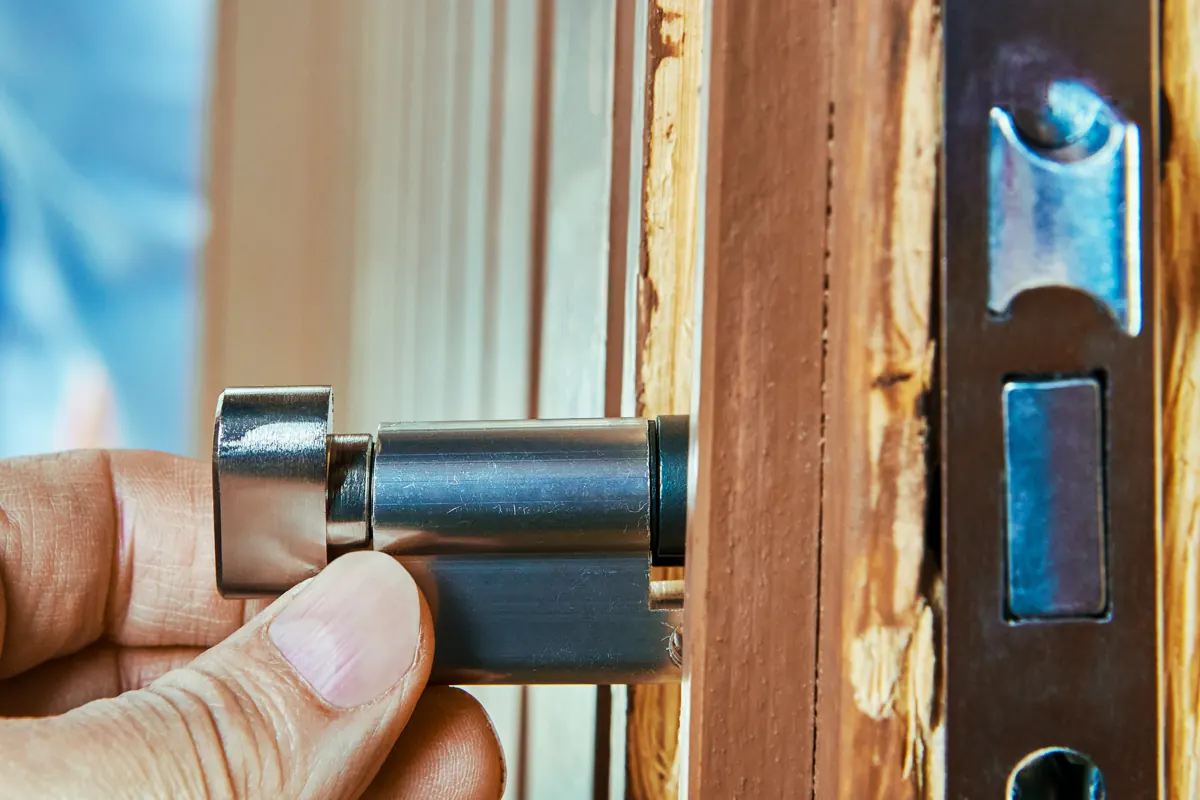
To be precise: your insurance position depends on your whole policy, not on any single device - but a monitor that changes nothing on the door cannot change what is fitted to the door.
See the Locksure monitor - from £59.99Beyond the hardware, many UK policies restrict what happens if the door was not locked. Three patterns appear again and again in real policy wordings and in published Financial Ombudsman Service decisions:
In another published decision (DRN1670950), an insurer declined a burglary claim arguing the door lock "had not been in use". The ombudsman noted that the only substantive evidence available was the family's own testimony that the door was locked - there was simply no record either way.
Locksure keeps a time-stamped history of your lock's state - every lock and unlock, in the app on your phone. If the worst happens and a claim ever turns on whether the door was locked, you have a contemporaneous record supporting your account, rather than testimony alone.
To be clear about what that is: potentially useful evidence, not a guaranteed outcome. Insurers and the ombudsman decide each claim on its own facts, and no device can promise what a third party will decide.
Standard policies typically restrict cover once a home has been unoccupied for more than 30 or 60 consecutive days, and while you are away they still expect the locks and alarms to be in use. Being able to confirm from your phone that the door is actually locked - and to see if that changes - sits naturally alongside those conditions. The day limits and exact requirements are in your own policy schedule.
UK consumer insurance runs on the Consumer Insurance (Disclosure and Representations) Act 2012: you must take reasonable care to answer your insurer's questions accurately. Security questions ask what locks are fitted to your doors, and Locksure does not change that answer, because it does not change your locks. If you are in any doubt about your own policy, ask your insurer - it costs nothing, and we would rather you did.
We are not going to pretend: we know of no UK insurer that currently offers a specific premium discount for a lock-monitoring device. Some insurers do discount approved alarm systems, and connected-home insurance propositions have existed in the UK for years. If a discount for lock monitoring appears, you will read it here with the insurer named - not before.
Not automatically - but if the fitted lock no longer meets the standard your policy specifies (for example BS3621 on a wooden final-exit door), a theft claim could be affected. Check the model against your policy wording, or ask your insurer, before installation.
No. It attaches beside the thumb-turn or key-turn and senses the lock's position. The cylinder, the mechanism and the door are physically unchanged.
Commonly a BS3621 five-lever mortice deadlock on wooden doors, or a TS007 3-star (or SS312 Diamond) euro cylinder on uPVC and composite doors - but always take the wording from your own policy documents.
Often not, or not in full. Depending on the wording, an unlocked door can fail a forced-entry requirement, a locks-in-use endorsement or the general reasonable-care condition. It is the single strongest reason to know, rather than hope, that the door got locked.
Locksure records a time-stamped history of your lock's state, which you can put forward as evidence supporting your account of events. Whether and how it is taken into account is for the insurer or ombudsman handling the claim - no device can guarantee a claims outcome.
Locksure does not change your locks, so it does not change the facts behind standard security questions. Your legal duty is to take reasonable care to answer your insurer's questions accurately - if you are unsure whether it is relevant to your policy, ask your insurer directly.
From £59.99 · fits your existing lock · no subscription for core alerts · UK-made
General information, not insurance advice; standards and policy wordings vary - always confirm with your insurer. Sources: Financial Ombudsman Service published decisions DRN-1809235 and DRN1670950; Consumer Insurance (Disclosure and Representations) Act 2012; insurer and industry guidance accessed August 2026.