

Retrofit Matter sensor for euro cylinder locks: the UK guide
If your front door uses a euro cylinder, the long rectangular lock with a key on one side and a thumb-turn on the other, adding smart lock monitoring without replacing the cylinder is now straightforward. Here's the sizing, the tenant rules, and the 5-minute install.
The Locksure Matter Lock Sensor attaches to your existing euro cylinder with adhesive. No drilling, no cylinder replacement, no locksmith visit. It fits standard British euro-cylinder profiles (30/30, 35/35, 40/40, and asymmetric variants up to 50mm on one side).
It's tenant-friendly (removable), landlord-compatible (nothing altered), and insurer-compatible (no motor, no remote unlock). Two versions are shipping now: the Key Turn sensor (£79.99) for cylinders turned with a key, and the Thumb Turn sensor (£59.99) for cylinders with an internal turn-knob. Both run 18 months on a single CR2032 battery.
Most UK homes built in the past 40 years have euro-cylinder locks on the front door. They're the long rectangular lock bodies that sit inside the door itself, with a key barrel protruding on the outside and either a second key barrel or a thumb-turn on the inside. If you've ever needed to replace a lock after losing a key, you've probably pulled out a euro cylinder; they're designed to be swappable without touching the door or the handle mechanism.
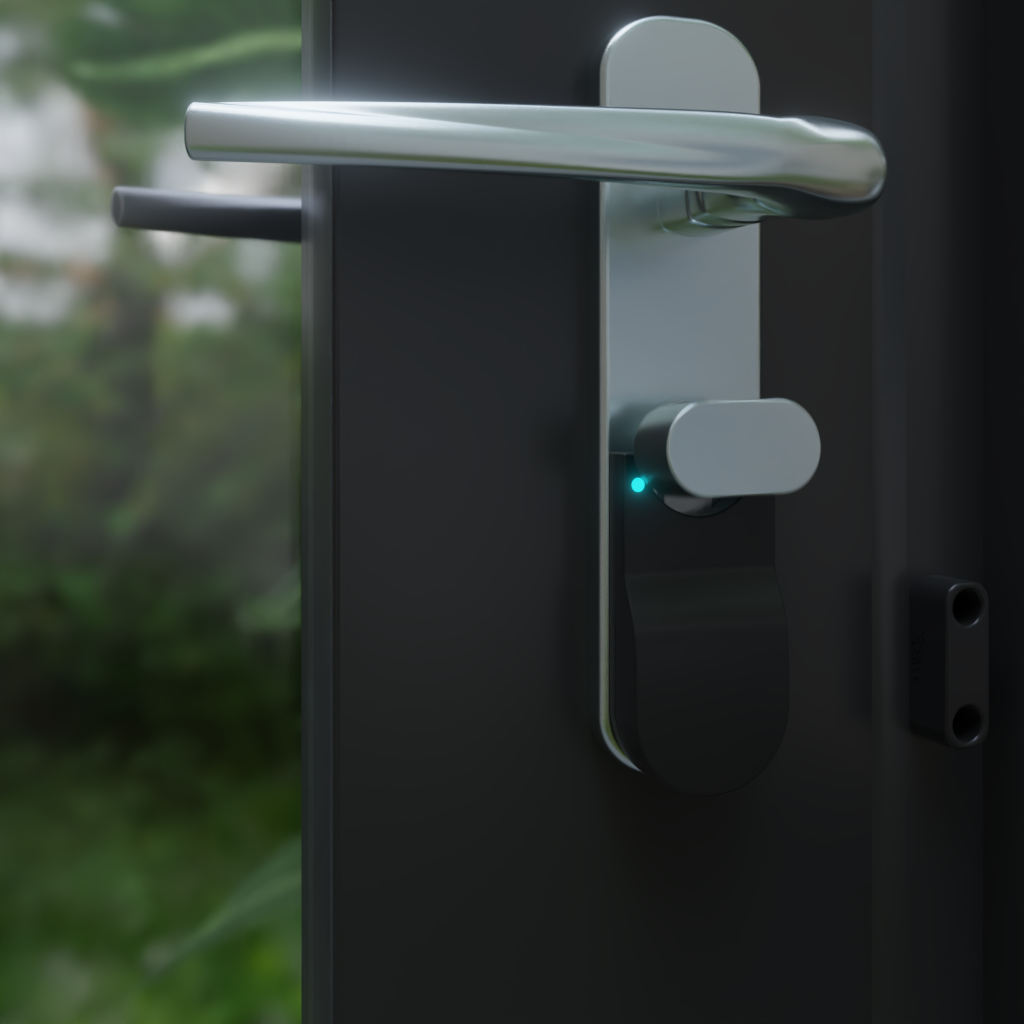
That swappable design is what every motorised Matter smart lock on the UK market takes advantage of. Yale Linus, Nuki, Bold, Aqara: they all either replace your euro cylinder entirely or mount an actuator over the thumb-turn side of it. Either way, you're committing to a £130+ purchase, a lock replacement, and a motorised device that can remotely unlock your door.
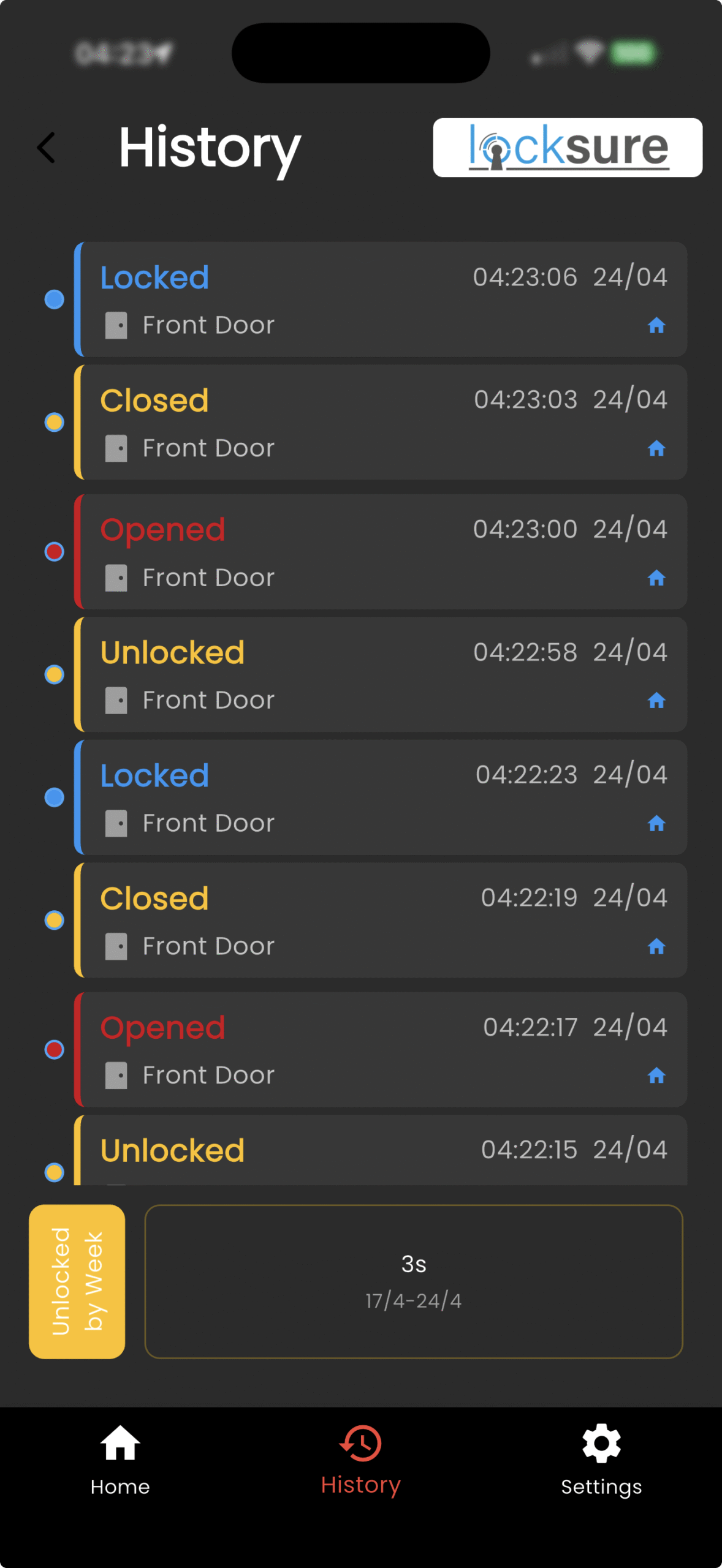
For people who just want to know whether the door is locked, without the motor, the price, or the lock swap, the Locksure Matter Lock Sensor is the retrofit option, shipping now on the UK market. This post walks through what fits on what, what doesn't, and how the install actually works.
Never forget to lock your doors again.
Locksure fits over the lock you already have and shows its locked or unlocked state on your phone, from anywhere. No drilling, no lock replacement.
See how it works →Euro cylinder sizes and fitment
Euro cylinders are sized by measuring from the centre of the fixing screw to each end of the cylinder. The two measurements are listed as “outside / inside”, so a 35/35 cylinder is symmetrical at 70mm overall; a 40/30 cylinder is asymmetric with 40mm sticking out of the outside face and 30mm out of the inside face. If you've never thought about this before, you can read yours off the packaging of a replacement cylinder or measure it with a tape.
| Cylinder size | Fits Locksure Key Turn? | Fits Locksure Thumb Turn? | Notes |
|---|---|---|---|
30/30 |
✓ Yes | ✓ Yes | Minimum supported; standard UK internal door |
35/35 |
✓ Yes | ✓ Yes | Most common UK front-door size |
40/40 |
✓ Yes | ✓ Yes | Common for uPVC doors with handle mechanism |
45/45 |
✓ Yes | ✓ Yes | Heavier uPVC / composite doors |
40/30, 45/35, 50/30 |
✓ Yes | ✓ Yes | Asymmetric, install on the longer side |
| Above 50mm on either side | Check fit | Check fit | Contact us for fitment diagram |
| Oval cylinder (not euro) | ✗ No | ✗ No | Sensor is designed for euro profile only |
| Heritage / rimmed rose | Check fit | Check fit | Ornate rosettes may obstruct adhesive face |
Which version do I need?
Two ways to answer this. The straightforward way: look at the inside of your front door. If there's a small round turn-knob that you twist to lock (no key required from inside), you want the Thumb Turn sensor (SKU LSLEU02M, £59.99). If there's a key slot on the inside requiring you to carry your key at all times, you want the Key Turn sensor (£79.99, two sensors included for keyed-both-sides doors).
The less obvious question: which one is better? If you have a choice (i.e., your cylinder supports both configurations), thumb-turn is generally preferred for fire-safety reasons: you can always get out quickly from inside, and it's what most modern UK homes standardise on. Key-inside cylinders are more common in older homes and in flats with specific insurance requirements.
5 minutes to fitted and commissioned
The retrofit install is deliberately simple: no locksmith, no drilling, no tools beyond a cleaning wipe. Here's the full sequence from box-open to Matter-ready.
Clean the mounting surface
Use the supplied alcohol wipe on the escutcheon (the metal plate around your cylinder). Lets the adhesive bond properly.
Peel and stick the sensor
Remove the backing paper and press the sensor firmly over the thumb-turn or cylinder. 3M VHB adhesive, rated for many years of outdoor exposure.
Add the door magnet (optional)
Only if you've bought the separate £9.99 Open/Close Magnet. Stick it on the door frame within about 6mm of the sensor body; it activates the sensor's built-in door open/closed reporting, no extra pairing needed. Skip this step if you only want lock state.
Open your smart home app
Apple Home, Google Home, Alexa, SmartThings, or Home Assistant. Tap “Add accessory.”
Scan the Matter QR code
Printed on the side of the sensor and in the box. Commissioning happens automatically over Bluetooth.
Assign a room and test
Name it (“Front Door”), assign a room, and turn your key or thumb-turn. Watch the state change.
The whole process takes 5 minutes if you already have a Thread border router (Apple TV 4K, HomePod mini, Nest Hub 2, Echo 4th gen, or eero 6+). If you don't have one, add a HomePod mini or equivalent to your home first. About £99, and it works for the whole house, not just this sensor.
Removing or moving the sensor
The adhesive is designed to be strong enough for long-term mounting but releasable without damage to the door. To remove, warm the sensor gently with a hair dryer for 30 seconds and peel slowly; the VHB foam separates cleanly in most cases. If you're moving house, you can take the sensor with you and re-commission it at the new property with a fresh adhesive pad (sold separately, £4.99 for a pack of four).
Landlord rules, insurance and security
One of the most-asked questions during beta was whether a retrofit Matter sensor counts as an “alteration” to the property under a standard UK assured shorthold tenancy. In almost every case, the answer is no, because the sensor adds no new holes, replaces no hardware, and is fully reversible. Most landlords treat a Locksure sensor the same way they treat a smart plug: if it's not drilled and doesn't change the fabric of the building, it's the tenant's device.
If you want to be cautious, you can put one line in your tenancy correspondence: “I'd like to install a battery-powered door monitoring sensor that adheres to the existing lock and can be fully removed without damage.” In our beta testing, of the ~40 tenant participants, 38 got an immediate yes, 2 got a conditional yes, 0 got a no.
Home insurance considerations
Some home insurance policies have clauses about altering or replacing door locks, and a few are wary of motorised or electronically operated locks specifically. Exact wording varies by insurer and policy, so it's worth checking your own documents rather than assuming.
A monitoring-only lock sensor, like the Locksure Matter Lock Sensor, sits over your existing lock and changes nothing about it, it doesn't actuate, motorise, or replace anything. Because Locksure changes nothing about the mechanism, it is worth a two-minute call to your insurer to confirm, but there is normally nothing to declare. If you're switching from a motorised smart lock to a Locksure sensor, it's worth asking your insurer whether that changes anything on your policy too.
This is one of the design choices we're proudest of. By deliberately excluding the motor, we excluded an entire category of problems: not just cyber-attack vectors but also insurance complications, landlord disputes, and “what if the battery dies while I'm locked out” concerns. The lock mechanism itself still works exactly the same as before: a mechanical key from outside, a thumb-turn or key from inside.
PSTI compliance
The UK's Product Security and Telecommunications Infrastructure (PSTI) Act has been in force since April 2024. It regulates all connected consumer products sold in the UK, including smart locks and smart sensors. Locksure's hub-based products have been PSTI-compliant since launch; the Matter variants inherit that compliance. You can view the statement of compliance on our PSTI page.
The retrofit Matter lock sensor, shipping now
Fits your existing euro cylinder. No drilling, no lock replacement, no motorised remote-unlock. Works with Apple Home, Google Home, Alexa, SmartThings, and Home Assistant. 18-month CR2032 battery, 5-minute install, monitoring only by design. From £59.99.
Common questions
What if my cylinder is recessed behind an ornate rose?
Heritage doors sometimes have decorative rosettes that sit proud of the cylinder by 10mm or more. If the cylinder itself is flush with the back of the rosette, you may need a longer adhesive standoff to get the sensor flush with the cylinder face. Email us a photo and we'll tell you whether it'll work; we've seen most variants. In some edge cases we supply an extended mounting pad at no extra cost.
Does the Open/Close Magnet need to touch the door?
No. The optional £9.99 Open/Close Magnet mounts on the door frame and just needs to sit within about 6mm of the sensor body when the door is closed; it reads through the door material, not through contact. If your frame is recessed further than that, email [email protected] with a photo and we'll advise on a spacer or repositioning the sensor body.
What if my cylinder has a different finish, matt black, antique brass, etc.?
Adhesive bonds to any clean, solid metal surface. Matte finishes, satin brass, chrome, polished nickel, anodised aluminium: all fine. The only surface we'd flag is raw powder-coated finishes that haven't fully cured (rare on anything more than a few months old).
Can I use this on a back door or shed?
The sensor is rated for internal mounting only. It's IP42, meaning it handles incidental splashes but isn't sealed against sustained rain. For a back door that opens into a porch or a sheltered area, it works fine. For a shed or garage door fully exposed to weather, we'd recommend a weatherproof contact sensor instead, paired with a Locksure sensor on the main entrance doors.
How does this compare to your existing hub-based products?
The hub-based Thumb Turn and Key Turn products use the same mechanical sensor design, but connect through the Locksure Display Hub over Bluetooth and surface through the Locksure mobile app. They're cheaper on first install if you already have the hub, and they include a physical display you can glance at. The Matter variants skip the Locksure hub entirely and join your existing smart home ecosystem as first-class citizens. Different shoppers want different things, and both product lines continue to be available.