

As parents, we never really switch off. Are the kids home from school? Did your teenager lock up when they left this morning? Is the front door definitely secure before everyone goes to sleep? None of these questions are dramatic on their own, but they add up. They interrupt meetings, they nag at you on the drive home, and they can turn a quiet evening into a low hum of doubt.
The frustrating part is that the answer is nearly always yes. The door usually is locked. The kids usually are home. What you are missing is not more security. It is a way to see what is already true, without phoning round or turning the car around. That is what door monitoring gives a family, and this guide walks through how it works in real family life.
A lock monitor shows whether your door is locked or unlocked on everyone's phone, in real time, from anywhere. It does not replace your lock, has no motor and cannot open the door, so it gives a family reassurance without turning into surveillance. Share the door once and every family member sees the same live status. The battery lasts 18 months on a single coin cell.
The Family Security Challenge
Modern families run on different timetables. Parents work, sometimes away from home. Children have clubs, sports and friends' houses. Everyone comes and goes at different hours, and the front door gets used a dozen times a day by people of very different ages. The usual worries fall into a few groups:
- Latchkey children: Are they home from school yet, and did they lock the door behind them?
- Teenagers: What time did they actually get in, and did they leave the house secure when they went out?
- Elderly parents: Are they remembering to lock up at night in a home you do not share?
- Night-time and holidays: Is the door definitely locked before bed, or before you leave for a week away?
Each of these is really the same question wearing different clothes: is the door locked right now, and can I confirm it without disturbing anyone? A door monitor answers exactly that and nothing more, which is the point.
If the worry is the not-knowing rather than the door itself, a lock monitor removes the need to remember or to ask. It shows your door's locked or unlocked state on your phone, from anywhere, without changing your lock or adding anything your children have to operate.
Latchkey Children: Confirming They Got Home
For a lot of families the tightest window of the day is the gap between the school bell and a parent getting home. Your child lets themselves in, and you would like to know two things without texting them the moment they walk through the door. First, that they are actually home. Second, that they locked up behind them.
A door monitor answers both with a single glance. When your child unlocks the door to come in, the app shows the door was unlocked at, say, 3:32pm. When they turn the lock behind them, it updates to locked. You do not need to interrogate them or install a camera pointed at your own hallway. You see a lock state and a timestamp, and you get back to what you were doing.
This matters more for younger children who are still building the habit of locking up. Instead of a nightly lecture, you have a quiet, factual record. If the door is still showing unlocked twenty minutes after they are home, that is a gentle prompt to send a message rather than a reason to panic. Most days, it simply says locked, and the school-run window stops being a worry.
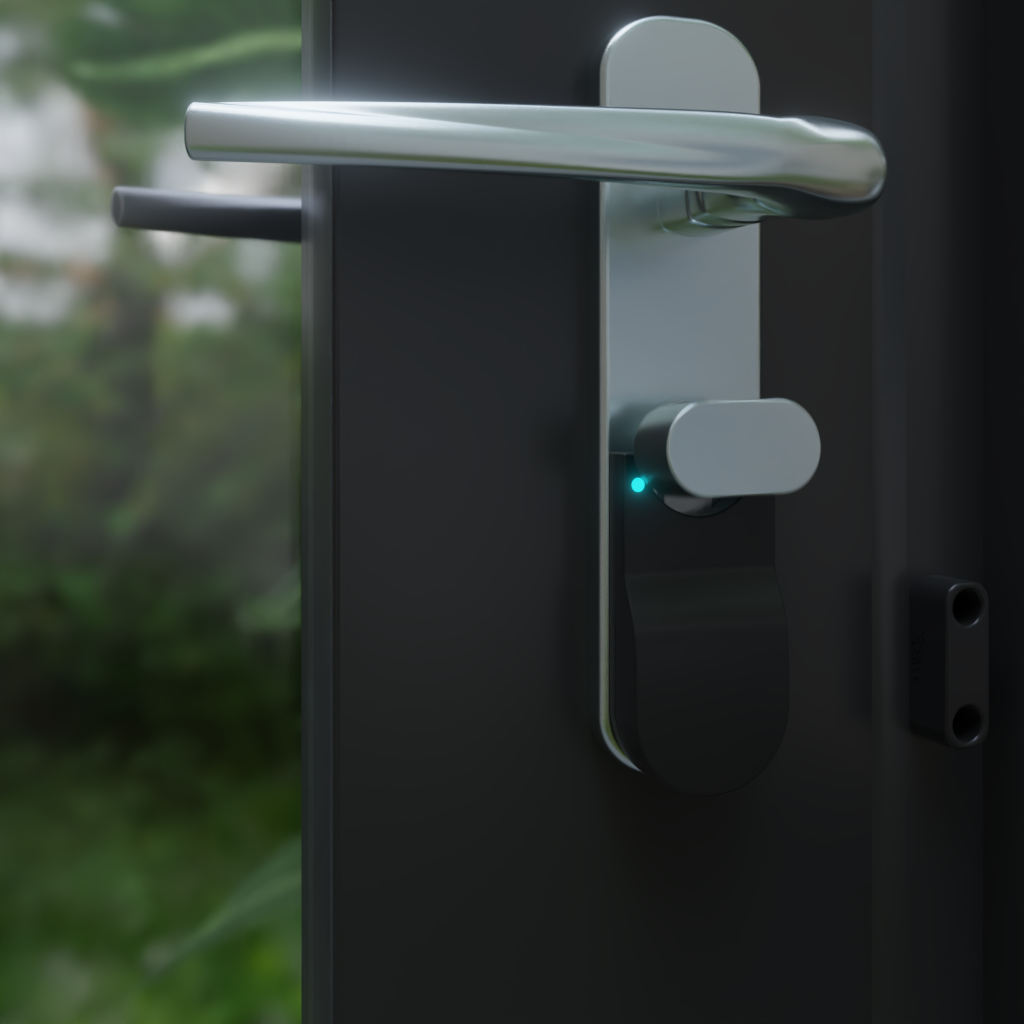
Never forget to lock your doors again.
Locksure fits over the lock you already have and shows its locked or unlocked state on your phone, from anywhere. No drilling, no lock replacement.
See how it works →Teenagers: Awareness Without Hovering
Teenagers are a different problem. They value privacy, they resent being tracked, and anything that feels like surveillance gets switched off, worked around or resented. The goal here is not to know their movements. It is to know your home is secure, which is a fair thing for any householder to want.
A lock monitor draws that line cleanly. It reports the state of the door, not the location of a person. You can see that the front door was locked at 11:40pm without knowing where anyone was, who they were with, or what they were doing. If your teenager is last in, the useful fact is simply that the door ended the night locked. If it did not, you find out before you are asleep, not the morning after.
Because it reads the lock rather than a phone or a wearable, there is nothing for a teenager to carry, charge or disable. It is passive. That tends to defuse the usual objections, because it genuinely is not watching them. It is watching the door.
Shared Access: Everyone's Phone Shows the Same Door
The feature that makes this work for a whole household is shared access. One monitor on the door, one live status, visible to every family member who needs it. Here is how it comes together in practice. (How monitors compare with locks, sensors and cameras: the full breakdown.)
- Fit the monitor once. It sticks over your existing lock with adhesive. No drilling, no lock replacement, no electrician, and nothing changes about how the door is opened.
- The account owner adds the door. Usually a parent sets it up in the free app and names the door, for example "Front door".
- Share it with the family. Each family member installs the app and is invited to view that door. From then on, every invited phone shows the same locked or unlocked status.
- Everyone sees the same truth. When the door state changes, it updates on all the shared phones at once. Nobody has to be home, and nobody has to ask anyone else.
Shared viewing is deliberately read-only in spirit. Family members see whether the door is locked. There is no button that opens it, because the device has no motor and no ability to move the lock. That is a security feature, not a limitation: even if someone got into an account, there is nothing to unlock. For a family this is the ideal balance, because the reassurance is shared but the risk is not multiplied.
The Balance: Awareness Versus Surveillance
There is a real line between keeping a family safe and making people feel watched, and the best tools sit firmly on the awareness side of it. The distinction is worth stating plainly, because it is easy to buy the wrong thing with the right intention.
The difference matters. "I can see the front door was locked at 4pm" is reassurance. "I logged exactly when each person arrived and how long they spent in every room" is surveillance. A door monitor is firmly the first kind. It tells you about the door, not about the people.
Cameras, indoor microphones and location trackers all have their place, but they change the feel of a home. A lock monitor does not. It answers the single question that causes most of the low-level worry, and it stops there. For most families that is exactly the right amount.
Real Family Scenarios
After-school arrivals
The kids get home at 3:30pm. A quick glance shows the door locked at 3:33pm. They are home and secure, and you are back to your meeting.
Bedtime peace of mind
Wondering if the front door is locked before you turn in? Check your phone. Locked. No trip downstairs, no lying awake.
Checking on a parent
Your mum lives alone. Share her door and see she has locked up for the night, without a phone call that makes her feel checked up on.
Already on the motorway
"Did anyone lock up before we left?" Check the app from the car. Locked. No arguing about turning back.
What to Look for in a Family Door Monitor
Shared access for the whole household
The single most important feature for a family is that more than one person can see the door. Look for read-only sharing so children and teenagers can be included without giving anyone the ability to open the door remotely.
A clear, timestamped history
Seeing when the door was last locked or unlocked is genuinely useful, and it is enough. You do not need room-by-room tracking to feel reassured. A simple, honest timeline of lock and unlock events does the job.
Easy enough for everyone
If it is fiddly, teenagers will not bother and grandparents will struggle. The best option requires nothing of the family day to day: it reads the lock passively, so there is no code to enter, no fob to carry and no habit to build beyond simply locking the door as usual.
No new lock, no landlord conversation
A monitor that fits over your existing lock avoids replacing hardware, which matters if you rent or if you would rather not change a lock everyone already knows how to use. It sticks on, and it comes off cleanly if you move.
Frequently Asked Questions
Can a door monitor tell me when my child gets home?
It shows when the door was unlocked and then locked again, with a timestamp, on your phone. That is usually enough to confirm your child is home and has secured the door, without tracking their location or watching them on camera.
Is this the same as tracking my teenager?
No. A lock monitor reports the state of the door, not the whereabouts of a person. You see whether the door is locked, not where anyone is or what they are doing. That is why it tends to feel acceptable to older children who resist being tracked.
Can everyone in the family see the door status?
Yes. You fit one monitor, then share the door with each family member's phone. Everyone sees the same live locked or unlocked status, and it updates for all of them at once when the door changes.
Can someone open the door through the app?
No. The monitor has no motor and cannot move the lock. It only reports the state. Even if an account were compromised, there is nothing to unlock, which is exactly why it is safe to share with the whole household.
Does it need charging or new batteries all the time?
No. It runs for 18 months on a single CR2032 coin cell, and the app tells you well in advance when the battery is getting low. There is nothing for children to charge or maintain.
Peace of mind for the whole family
Locksure fits over the lock you already have and shows its locked or unlocked state on everyone's phone. Know the house is secure. Know the kids got home. No drilling, no lock replacement, no subscription, and the battery lasts 18 months. From £59.99.
See how it works →Family safety does not have to mean family surveillance. The right tool gives you the one fact that removes most of the daily worry, that the door is locked, and it shares that fact with everyone who needs it. For a busy household with people coming and going at all hours, that quiet "all secure" on a phone is usually all the reassurance anyone needs. If you would rather start with a single door, the Thumb Turn monitor covers the most common UK front door and shares to the whole family from day one.